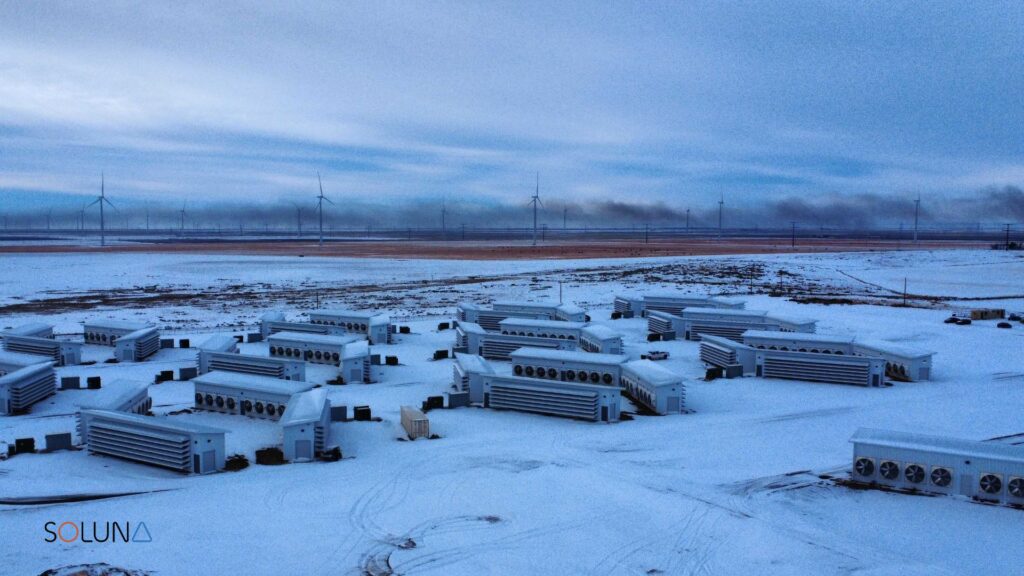



by Dip Patel, CTO
The Wall Street Journal recently reported that the U.S. will need 80 GW of new generation every year to keep up with the AI boom.
In 2024, the USA built 50 GW. China built 495 GW in one year.
Our grid is a mess. Fragmented decision-making, politicized processes, multi-state agreements, and a lack of risk tolerance and capital discipline are slowing us down.
Endless articles diagnose the problem and point to silver bullets: more transmission, more batteries, more something.
What I rarely see is true systems-level thinking.
Look at a basic audio amplifier circuit.
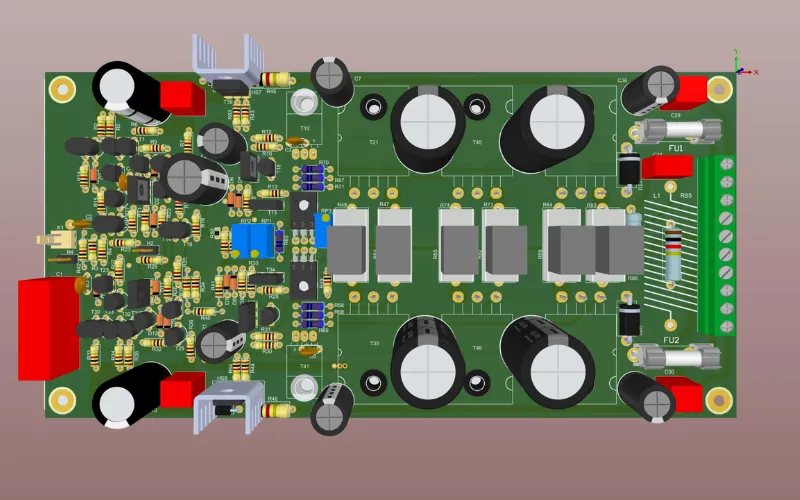
Those tall cylinders are capacitors. The gold-striped ones are resistors. Others are inductors, fuses, and transistors. Hundreds of components, all there to accept power and signal, clean them up, and deliver them to the load with minimal loss and noise.
Some engineers work on subsections — the input amp, the output stage — but there is always a systems engineer responsible for how everything works together.
Now picture the entire U.S. grid as that circuit board. Its job is simply to accept energy (wind, solar, batteries, and yes, fossil fuels) and deliver it to loads (data centers, hospitals, homes) — same principle.
But unlike that circuit board, our grid has no real systems engineers. We have people building batteries, transmission, control systems, microgrids, analytics, and switching hardware — each focused on their own slice.
The systems-level view is primarily confined to labs and academic circles. It’s not driving real-world decisions.
Data center operators worry about interconnection.
Grid operators worry about not breaking the system.
Battery manufacturers are chasing incremental chemistry battles.
What the grid needs is all of these components working in harmony. Supercapacitors to handle fast variations and harmonics. Large batteries to stabilize nodes. Smaller batteries at the edge to smooth local connections. Mechanical systems to provide inertia and prevent cascading failures like Spain’s blackout. Not one solution — all of them, working together.
Right now, engineering is as fragmented as policy. Thousands of companies are developing impressive technologies, but almost no one is stepping into the systems engineering role. Even grid operators modernize in a piecemeal fashion because regulations evolve in the same way.
We need cooperation across the board.
I think about the ARCI program I worked on at Lockheed Martin. (Read more here.)
In the 90s, the submarine budget was cut by 95% while China and Russia were rapidly improving their stealth capabilities. ARCI was the response: a program that forced true systems-level collaboration across Lockheed, Raytheon, Northrop, Electric Boat, General Dynamics, and many others.
Acoustic Rapid COTS Insertion (ARCI) became the backbone of the U.S. submarine fleet’s combat system. COTS stands for Commercial-off-the-shelf. The idea is to upgrade subs fast with technology that’s already commercially available, but hardened and integrated into the submarine environment.
ARCI has been running since the 90s and has been remarkably successful.
With only 5% of the original budget, the Navy was able to do the impossible: every 18 months, every submarine in the fleet receives a full systems-level upgrade. Not a partial fix. Not a localized improvement. A coordinated refresh triggered by a single one-page memo from the Commander of the Pacific Submarine Fleet stating, in plain English, the operational problem to solve.
That memo unleashes thousands of people and billions in R&D annually.
Competitive companies collaborate. Upgrades arrive on time, on budget. The result: the most secure platform in human history remains unmatched.
Mission above all.
Cooperation above all.
Transparency above all.
Systems thinking above all.
This program is so successful that it’s taught at most of the officer training schools in our military and business schools all over the world.
If submarines can do it, so can the grid.
TLDR:
The U.S. grid is facing historic demand from the AI boom, but we’re approaching the problem in fragmented pieces — more batteries here, more transmission there — without true systems-level engineering. Other complex, mission-critical systems (such as the U.S. Navy’s ARCI submarine program) demonstrate what’s possible when diverse technologies and competitors operate under a unified architecture. To modernize the grid, we need the same mindset: mission first, cooperation across the ecosystem, and a systems engineer for the entire nation’s power circuit.
Learn more about Soluna visit → https://www.solunacomputing.com/