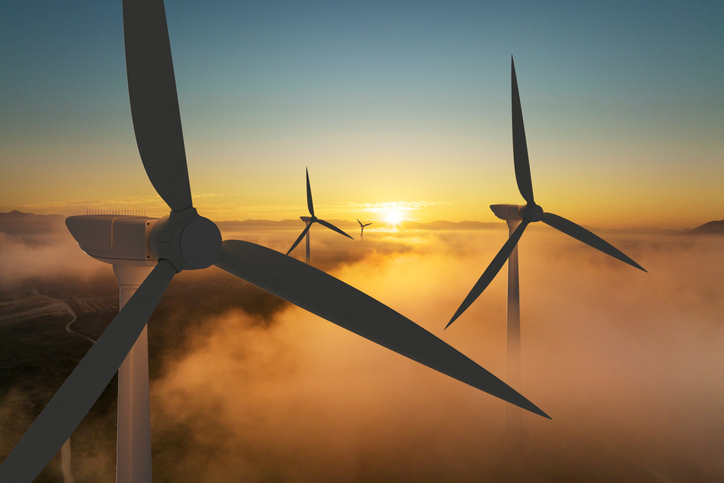


For most of the last two decades, the data center industry built itself around the grid.
New facilities are located near existing substations. Power purchase agreements are negotiated years in advance. Interconnection is treated as the foundation on which everything else rests. The model was logical. The grid was reliable, scalable, and predictable. Building around it made sense.
Then AI arrived and rewrote the timeline.
The infrastructure decisions that once played out over five to ten years now need answers in twelve to eighteen months. A hyperscaler that identified a site today and began the interconnection process tomorrow would, in many U.S. markets, be waiting until 2030 for grid access, if it arrives on schedule at all. North American data center vacancy sits at 1%.
92% of the development pipeline is precommitted before it comes online. The constraint is not only demand, capital, or compute. It is also the gap between how fast AI infrastructure needs to scale and how fast the grid was built to move.
This is what people mean when they talk about speed-to-power. Not speed as a convenience. Speed is the difference between capturing a market and watching it close.
The conventional response to this problem has been to optimize around it: secure PPAs earlier, build relationships with utilities, and move faster through the queue. These are reasonable tactics.
They have also produced an industry where the remaining capacity is spoken for before it reaches the market, where lease rates have risen 9% year over year, and where grid-dependent competitors that cannot access power faster than the interconnection process allows are, functionally, waiting. What most of the industry has not done is question the premise.
If the grid is the constraint, what does infrastructure look like when it isn’t built to be grid-dependent?
Soluna has been sitting with that question for years.
Our answer is behind-the-meter co-location: data centers built directly at renewable generation sites, connected to the power source before it touches the grid. When you build at the source rather than at the end of transmission, the interconnection queue does not apply to you. The PPA negotiation stops being a variable in your deployment timeline. The distance between available generation and energized compute collapses.
This is not a shift in positioning for us. Soluna has been building behind-the-meter since Bitcoin mining was the primary workload. What Bitcoin required — co-located, low-cost, high-density power with the operational discipline to run at scale through volatile markets — is what AI requires now. The workload has changed. The infrastructure logic has not.
Our acquisition of the Briscoe Wind Farm at Project Dorothy in West Texas made that logic concrete in a new way. Energy production and compute infrastructure under a single ownership structure means there is no third party controlling the power supply. No external agreement that could change the deployment timeline. No counterparty risk embedded in the energy layer. It is the most direct expression of the behind-the-meter thesis: we do not lease access to power. We own the source.
There is a version of this story that sounds like it comes with a tradeoff.
If you are co-located with a renewable source, does that mean your power is intermittent? If the wind is not blowing, does the data center stop?
It is a fair question. And it’s where Soluna’s Renewable Computing platform comes in.
The conventional assumption is that renewable generation and always-on compute are fundamentally in tension: that you either build on renewable energy and accept the variability, or you build on the grid and accept the cost. Renewable Computing is proof that you do not have to choose.
We build at the source of power. But building at a renewable generation site does not mean running on renewable energy alone, and that distinction matters.
Soluna draws from three power inputs at every site: direct generation from the renewable plant, curtailed energy that would otherwise go unused, and grid supplementation through existing interconnections. These are not backup options. They are the designed architecture of how our sites are powered.
Renewable generation leads because it delivers the lowest wholesale energy costs. Grid supplementation ensures that when generation variability occurs, compute workloads continue without interruption. MaestroOS, our proprietary energy management software, manages the balance between all three in real time, routing to the cheapest available source and drawing on grid power when generation alone is not enough to meet demand.
This is what continuous AI compute actually requires: not a single abundant source, but a managed mix that never creates a gap between power availability and workload demand. The renewable foundation is what makes the economics work. The multi-source model is what makes the uptime possible. Neither works without the other.
Renewable-first. Not renewable-only. That is Renewable Computing.
This is also where our history in Bitcoin hosting becomes directly relevant to AI.
Batch computing applications, the category Bitcoin mining falls under, are designed to be flexible. They ramp up when power is abundant and ramp down when it is not. That flexibility is a feature: it is what makes the economics of renewable co-location work in the first place.
AI training and inference workloads often require near-continuous uptime. The multi-source power model, managed by MaestroOS, bridges that requirement. The same infrastructure model that worked for Bitcoin works for AI, not because we built two different systems, but because we built one system that was always capable of both.
The market is coming to where we have already been building.
Texas is where the opportunity is sharpest right now. The state is on track to become the largest data center market in the world by 2030, driven by land, energy, and the convergence of AI infrastructure demand in a region where power is abundant, and the grid is already strained elsewhere.
Soluna’s development pipeline in the region exceeds 1 gigawatt. Dorothy 3, our next AI computing campus at Project Dorothy, advances on a foundation in which the energy question has already been answered.
For investors, the same story arrives at the same place from a different angle.
Behind-the-meter colocation with owned generation creates a cost structure that grid-dependent competitors cannot replicate without rebuilding their infrastructure model from the ground up. Multi-year energy contracts underpin the revenue visibility that makes a 4.3 GW+ development pipeline something more than a projection. Each project advances through defined phases, converting contracted capacity into operating infrastructure.
Bitcoin proved the model works at scale. AI is the expansion.
The workload evolves. The power advantage compounds.
The data center industry spent decades building toward the grid because the grid was the most reliable path to power.
That logic held until it didn’t.
AI infrastructure will not wait in the queue. The developers who understand that, who have built beyond the grid rather than relying solely on access to it, are the ones who can answer the speed-to-power question with something other than a wait time.
Speed-to-power is not just a feature of Soluna’s Renewable Computing model. It is the foundation on which our company was built.