

by Dip Patel, CTO
In late 2016, I received a cryptic email from John Belizaire (now our CEO) asking whether I knew anything about cryptocurrency — specifically, Bitcoin. I’d been mining since 2010, and many MIT Sloan students still remember me begging them to buy BTC in 2012. They thought I was nuts, which is a common theme in my life.
John told me he was exploring a new company: a 900 MW wind farm in Morocco with a co-located Bitcoin mine because there was no grid connection. Build the wind farm, run compute off-grid, and when Morocco finishes the transmission build-out, sell power to the country and help them hit their 2035 sustainability goals — vertical Integration: wind + compute.
He needed a CTO. I wanted the job. I knew this idea could change the world.
I walked into the private equity shop to interview. Their first question: “What does Radar and Smart Home have to do with any of this?” Fair question — until you understand the systems.
The radars I worked on at Lockheed Martin had three defining traits:
- Extreme power density. I worked at the center of high-power electronics and highly efficient cooling—everything from quantum-dot-doped materials to phase-change immersion cooling.
- Off-grid operation. These systems were deployed in harsh environments, run by minimally trained operators. State-of-the-art tech had to be remotely deployable and reliable anywhere on the planet.
- They were high-power data centers. The only difference is that radars feed antennas; data centers feed GPUs. Both exist to convert energy into useful information.
Lots of power. Lots of heat. Tight control systems. Massive data processing. That’s the job.
So when consultants — all of them — told me “You need batteries, wind isn’t stable,” or that I was crazy for moving computing away from cities, I disagreed. You don’t need batteries. You need a data center that matches the wind.
Think of two water pipes. If the diameters match, the flow is smooth. If they don’t, you get turbulence and backflow. In electrical engineering, we call this impedance matching, and we use the Smith Chart to ensure all the energy from Component A flows into Component B with minimal loss.
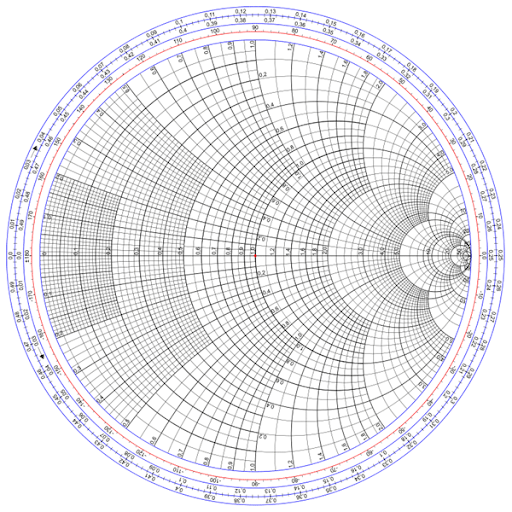
Smith Chart
As a radar engineer, this chart runs your life. Perfect matching means perfect efficiency. Perfect efficiency means longer range. Longer range means mission success.
That systems-level mindset — and obsession with squeezing out every watt — made me effective in radar. It’s also why I knew I could build what Soluna needed: a high-efficiency, high-density compute system designed to match renewable energy.
Traditional cloud data centers never needed this thinking. They weren’t that power-hungry and were built around latency and network proximity, which is why they cluster around random internet exchange points.
But the AI cloud is different. It’s a power-hungry beast where every fraction of a decibel matters. In structure, design, and behavior, an AI data center resembles a high-power radar far more than a traditional cloud facility.
That’s why I’m here.
And it’s why, if you’re evaluating data center companies in the AI era, you should look closely at their leadership. Find out who’s hiring people obsessed with efficiency and power. Find out who’s hiring phased-array radar engineers—and pay attention to their trajectory.
TLDR:
AI data centers look a lot more like high-power radars than traditional cloud facilities—they’re power-dense, off-grid capable, and require extreme efficiency. My background in radar engineering and systems-level design made me realize we could build data centers that match renewable energy directly, without batteries, by focusing on impedance-like power matching and whole-system efficiency. The AI era demands leaders who think this way—obsessed with power, efficiency, and systems design.
Learn more about Soluna visit → https://www.solunacomputing.com/