

Welcome to another installment of Soluna’s AMA (Ask Me Anything) series, where we turn the mic over to you.
For this edition, we crowdsourced questions directly from our community on X. You can view the original thread and join the conversation here.
In this Q&A, Soluna CEO John Belizaire responds to questions from shareholders and followers who want a deeper look at our strategy, growth, and vision for Bitcoin, AI, and Renewable Computing.
Jim asked, “John has stated multiple times throughout the year that it will take 15 months to construct Kati 2 and that it will be completed by the end of 2027. Has that plan changed or is the company still on track to execute on time?”
Our construction timeline depends on customer requirements and the timing of a signed lease. We are currently gathering design input from potential tenant(s), and we plan to move as quickly as possible once the design is complete and we have a definitive agreement with the first tenant. We will share firm timing as those milestones become definitive and disclosable.
Eddie asked, “What is the plan for financing for the build-out, and is there any progress with securing a tenant?”
Our current plan is to finance Kati 2 through a combination of project-level financing and TopCo (parent-company) financing. Once a lease is signed, we would work with our financial advisors to launch a project-level debt financing for Kati 2 and execute one or more equity financings to support the build-out. Today, we expect that mix to be in the range of an 80/20 split, debt to equity, though the final structure will depend on market conditions and customer requirements.
CapitalAre asked, “How do you guys see the scalability for the power development pipeline?”
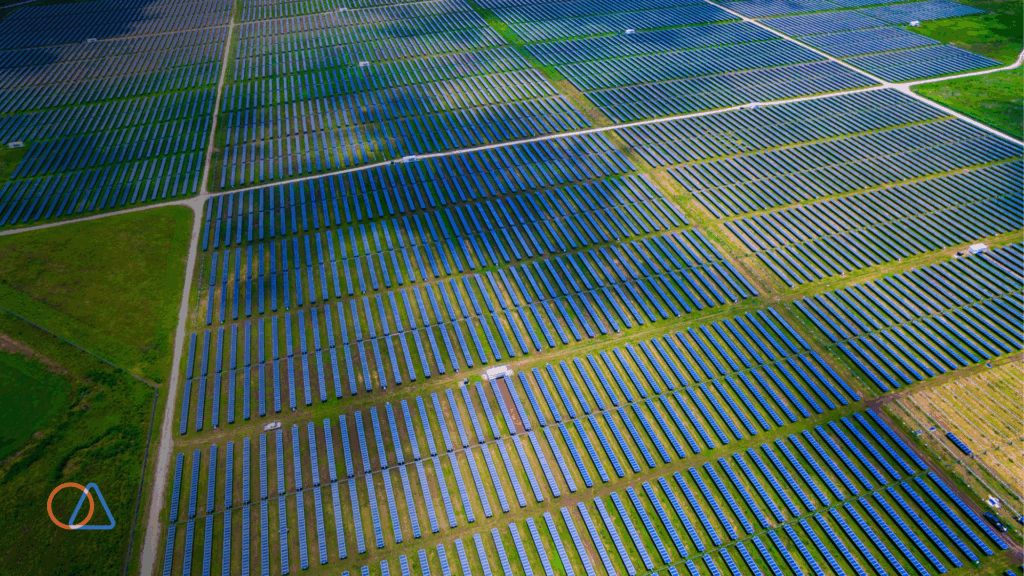
If you’re asking about the pipeline’s potential to grow over time, that growth is driven by our deep relationships with some of the country’s top independent power producers (IPPs) who build and operate wind and solar farms. Our 4.3 GW pipeline is a mix of wind and solar projects that have completed curtailment assessments, and more than 1.0 GW is already in active development — meaning those projects are marching toward shovel-readiness over the next year or so. As each project reaches that stage, it feeds our AI or Bitcoin data center pipeline, depending on its size and other characteristics. We expect this growing pipeline to help us more than double our assets under management in the coming years, with a goal of deploying over 1 GW of data centers.
Anonymous asked, “What do ERCOT’s ‘Batch Zero’ rules and Texas Senate Bill 6 mean for Soluna’s Texas projects?”
The ERCOT Batch Process and SB6 were created to administer the larger number of data center requests in a fair and transparent manner and also to protect the Texas ratepayer.
Many of our legacy projects benefit from completion prior to the implementation of the batch process and are not affected by it. For other projects, they are subject to the batch process, and we are working with the TSPs and ERCOT to ensure compliance.
What effect does Gov Abbott’s Data Center Audit have on Soluna?
On August 3, 2026, Governor Abbott directed the PUCT and ERCOT to audit all data centers advancing through ERCOT’s interconnection queue before new projects are approved — part of the state’s response to roughly 474 GW of pending interconnection requests, about 90% of it data centers.
Soluna welcomes this added transparency; a consistent, rigorous review helps distinguish responsible operators, like Soluna, who have built projects on defensible fundamentals.
Our development model already reflects the priorities the order emphasizes:
- our projects don’t require costly transmission upgrades which impact ratepayers;
- our operating sites are flexible, interruptible load that don’t contribute to peak demand;
- we encourage new wind, solar, and dispatchable generation at and around our sites;
- we use very little water by design;
- we pay our own interconnection costs and aim to deliver a positive economic impact on the communities that host us; and
- as a publicly traded US company, Soluna does not raise concerns about ownership or control by hostile foreign adversaries
Importantly, the directive is aimed at new studied load in the queue. We expect that the initial phases of our existing projects, specifically Dorothy 3 and Kati 2, will be categorized as already energized or ‘base load’, not new studied load, so we do not expect them to be the primary focus of the audit.
In short, while we may receive inquiries as part of the audit, we see limited direct exposure and will continue to cooperate fully with PUCT and ERCOT throughout the process.
A few followers have asked, “What type of backup system will Soluna have for 99.9% tier 3 uptime AI compute?”
Soluna’s data center sites are being designed with multiple layers of backup, scaled to each site’s availability requirements.
First, each site will include a large battery-inverter system that shields the grid from the power fluctuations of the GPUs and provides backup to the entire site (e.g., for up to one hour, etc.) during a grid outage. You’ll hear us refer to these as “BESS,” short for Battery Energy Storage System. Second, the data center buildings and data halls include diesel generators for backup. And finally, on some projects we will have the option to add on-site natural gas generation to deliver prime power to the site. Combined with the renewable energy site and behind-the-meter grid interconnection, we believe this architecture allows us to deliver Tier 3 or higher availability for AI compute.
Anonymous asked, “What is the current status of the exclusive negotiations for Kati 2’s 100MW capacity? Are the potential customers hyperscalers (Microsoft, Meta, Google, etc.) or AI cloud providers (CoreWeave, etc.)? When is the expected timeline for announcing the final contract (Definitive Agreement)? Is Dorothy 3 already in discussions with customers?”
As we shared in our recent Business Update press release and an interview with Power Mining Analysis, we are currently in exclusive negotiations with a potential tenant. A number of commercial, technical, and schedule requirements are being negotiated as we complete the design of the site, and these negotiations can take several months.
Dorothy 3 was also covered in our recent update. We’ve begun master planning, land due diligence, connectivity analysis, and power planning. As we complete that work, we’ll begin marketing the site to prospective tenants. In the meantime, we’ve received inbound inquiries from potential tenants.
John asked, “Looking at Soluna’s current energy pipeline, a significant portion of the capacity is distributed across multiple non-interconnected sites in Texas. Is the long-term strategy to continue developing and operating these as independent, modular behind-the-meter facilities, or is there a plan to eventually interconnect some of these sites into larger, more unified campuses? Additionally, if interconnection were pursued, how would the company approach potential latency considerations for higher value AI?”
Our long-term strategy remains to develop Soluna data centers as behind-the-meter facilities. Some of these campuses will grow beyond the production (MW) capacity of a single wind farm. In those cases, we’d implement our “clustering” strategy, drawing power from multiple wind farms located close to the data center campus. Our siting and network design account for the connectivity and latency requirements of higher-value AI workloads as part of that planning.
Perspez asked, “H.C. Wainwright noted that Dorothy 3 may require an approximately six-month reliability study and PUCT approval process under Texas SB 6 before data-center construction can begin. As Soluna looks to replicate Kati 2 across its wider pipeline, could large-load regulatory approvals become the main constraint on scalability, and what is the company doing now to shorten or run these processes in parallel?”
Dorothy 3 already has power running to the Bitcoin sites adjacent to it, which will help accelerate power delivery to Dorothy 3 while any reliability studies are completed. More broadly, Soluna works to keep new load brought onto the system below the large-load threshold where possible, while assembling a portfolio approach to expanding data center campus power supply.
What is the current development stage of Dorothy 3, and which milestones must be completed before Soluna can begin a formal tenant process comparable to Kati 2?
To begin formal marketing, we must complete all environmental work on the land, connectivity (fiber) studies, the schematic design and master plan, and ERCOT-related power planning. This includes increasing the load approval to a full 150 MW gross power envelope to support 50–100 MW of critical IT (CIT) in the first phase. We expect to begin marketing the site in the fall, and in parallel we’d advance detailed design work on the site.
Is Soluna building an internal delivery platform capable of developing several AI campuses simultaneously, or will each project require a separate development and construction partnership?
With the hiring of Ryan Carver as Chief Development Officer in July, Soluna now has the cornerstone of an internal delivery platform capable of developing multiple AI campuses simultaneously. Ryan is building out his team now. He previously led the buildout of Microsoft’s large-scale data center campus outside Milwaukee, Wisconsin.
What lessons from the rapid deployment of Kati 1 are being directly applied to the development and construction plan for Kati 2?
Kati 1 and Kati 2 are two different types of development. That said, Kati 1 will demonstrate measurable advantages for other Bitcoin projects in our pipeline — including learnings in long-lead equipment procurement, high-voltage construction, and the modular design enabled by our Cormint partnership.
Could infrastructure already developed for Kati 1, such as fiber, roads, workforce relationships, or power expertise, reduce the cost and timeline of Kati 2?
Again, these are two very different designs. Fiber routes and bandwidth will differ. Some approaches to power will carry over, especially the renewable-energy generation and grid-integration work we’ve done there.
Is Soluna discussing additional sites with EDF beyond the existing Kati relationship, and could the partnership eventually become a broader multi-project development platform?
Yes. With each power partner, we typically explore multiple projects across their portfolio. EDF is one of the largest renewable-energy platforms in the U.S.
Will Soluna disclose more standardized development milestones for each project so investors can better understand how the pipeline is progressing toward revenue?
While every project is different, each must meet a series of key milestones on its way to notice to proceed (NTP). Our pipeline slide currently shows aggregate megawatts by state, and our pipeline table shows the status of each project.
How many large AI projects can Soluna’s current organization realistically develop at the same time without creating execution bottlenecks?
We’re a growing organization, and we expect to scale the team using standard approaches for our industry. As we add more projects in Texas and beyond, we’ll size the team accordingly. With Ryan Carver’s hire, we’ve begun shaping the organization and skill sets we’ll need. Execution is our number-one priority (P1), and we’ve already made strides toward building a scalable organization. We’ll report on the team’s makeup in our regulatory filings as we make these investments.
Could Metrobloks remain involved across Soluna’s wider pipeline, or is its current role primarily focused on Kati 2 Phase 1?
Metrobloks is currently slated to be involved in both Phase 1 and Phase 2 of Kati 2.
After the first AI campus is financed and under construction, how much faster and cheaper should the second and third projects be because the design, financing structure, and development process have already been proven?
We expect each project to go faster and costs to come down as we repeat the process—though that depends on factors like location, customer requirements, and macro conditions. Our goal is to create repeatable processes — a repeatable design, a repeatable procurement approach, and a repeatable pre-construction playbook — that accelerate delivery. Our new CDO brings deep experience here, and we intend to leverage it.
Thank you for submitting your questions!
If you’re reading this and haven’t had a chance to ask your question, it’s not too late. Drop your questions on Twitter @SolunaHoldings to have your questions answered in our next AMA installment.
If your question wasn’t answered here, be sure to subscribe to our newsletter. We’re providing business insights and answering questions there as well.
In the meantime, keep up with the latest from Soluna by visiting our Investor Center and reading our Latest News.
Safe Harbor Statement
This AMA contains forward-looking statements. These statements are made under the “safe harbor” provisions of the U.S. Private Securities Litigation Reform Act of 1995. These forward-looking statements include all statements, other than statements of historical fact, regarding our current views and assumptions with respect to future events regarding our business, operations, project developments and financing plans, and other statements that are predictive in nature. These forward-looking statements can be identified by terminology such as “will,” “expects,” “anticipates,” “future,” “intends,” “plans,” “believes,” “estimates,” “confident,” and similar statements. Readers are cautioned that any forward-looking information provided by us or on our behalf is not a guarantee of future performance. Actual results may differ materially from those contained in these forward-looking statements as a result of various factors disclosed in our filings with the Securities and Exchange Commission (“SEC”), including the “Risk Factors” section of our Annual Report on Form 10-K filed with the SEC on March 31, 2025. All forward-looking statements speak only as of the date on which they are made, and we undertake no duty to update or revise any forward-looking statements, whether as a result of new information, future events, or otherwise, except to the extent required by law.